

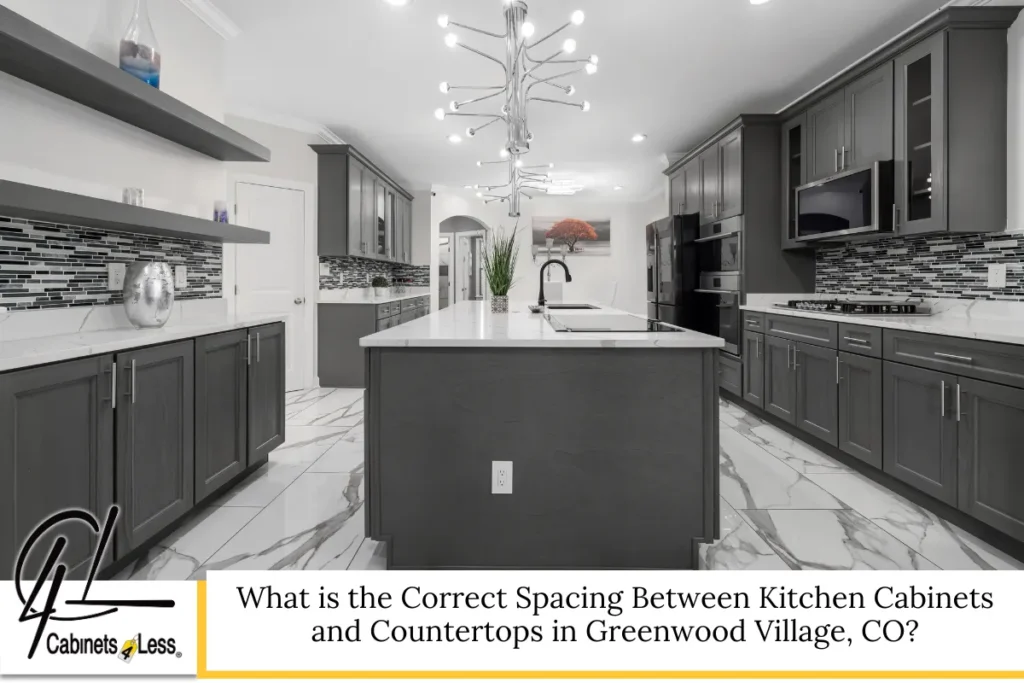
Why Spacing Matters More Than Most Homeowners Realize
Kitchen Cabinets are often chosen for style, finish, and storage, but spacing is what determines whether a kitchen actually works. When cabinets sit too low, daily tasks feel cramped and uncomfortable. When they’re mounted too high, the kitchen loses function and visual balance. Homeowners in Greenwood Village often discover these issues after remodeling, when changes are costly and disruptive. Poor spacing can affect appliance clearance, lighting effectiveness, and even resale value. The good news is that correct cabinet-to-countertop spacing follows proven standards that balance ergonomics, safety, and design. Once you understand these measurements and how they adapt to real homes, you can plan a kitchen layout that feels effortless, functional, and visually cohesive.
Standard Cabinet-to-Countertop Measurements Used in Modern Kitchens
Across most residential kitchens in the U.S., the accepted distance between countertops and wall-mounted cabinetry is 18 inches. This measurement is taken from the top of the finished countertop surface to the bottom of the upper cabinet. It provides adequate space for food prep, small appliances, and under-cabinet lighting while keeping storage within comfortable reach.
This spacing standard has remained consistent because it aligns with human reach ranges and countertop usability. Whether a kitchen is compact or expansive, this dimension creates a balanced workflow between prep zones and storage zones. In high-end kitchen cabinetry layouts, this spacing may be subtly adjusted, but 18 inches remains the foundation.
When the Standard 18 Inches Needs Adjustment
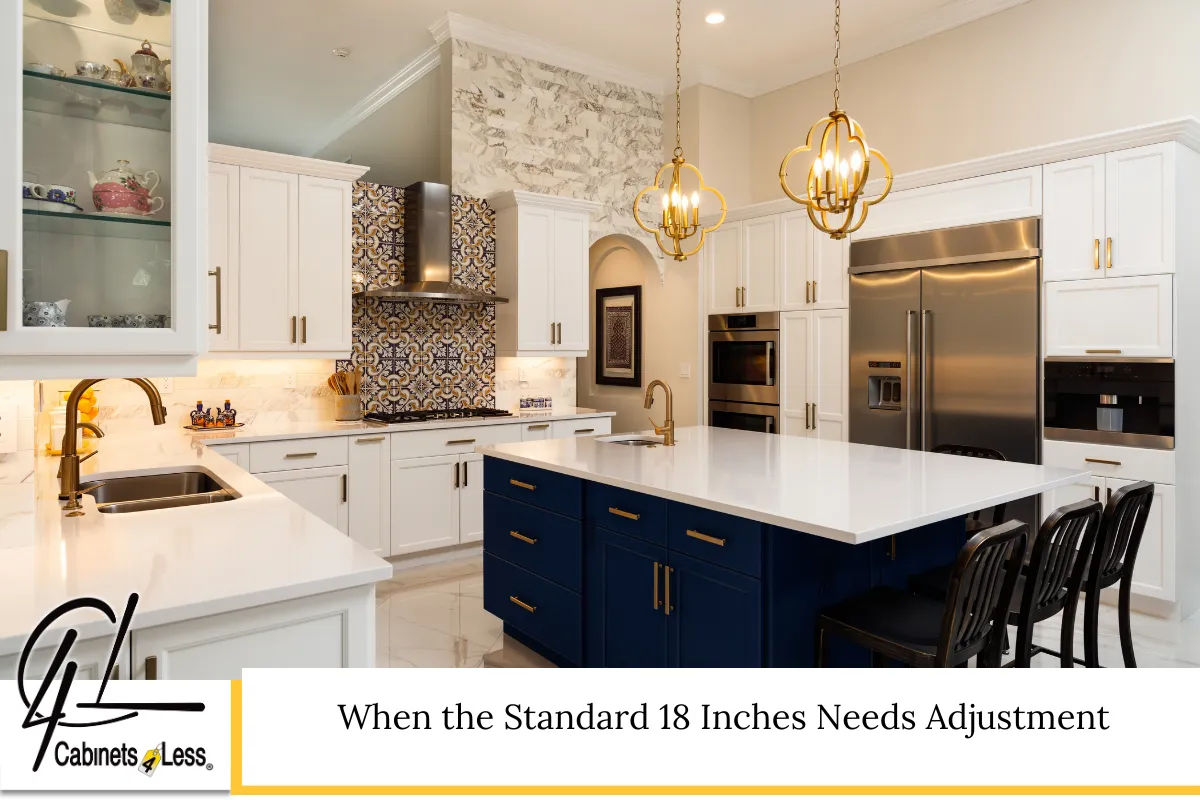
While 18 inches works for most kitchens, real homes are not one-size-fits-all. Several factors can justify adjusting cabinet spacing slightly without compromising function.
Ceiling Height and Overall Kitchen Proportions
Homes with 9-foot or taller ceilings often benefit from cabinets mounted slightly higher to maintain visual balance. In these kitchens, designers may increase spacing to 19 or even 20 inches, especially when using taller upper cabinets or stacked cabinetry.
Countertop Thickness and Edge Profiles
Thicker countertops made from stone or quartz can reduce usable clearance if spacing isn’t recalculated. A countertop with a thick edge profile may require cabinets to be raised slightly to maintain functional space below.
Homeowner Height and Ergonomics
Taller homeowners may prefer slightly increased spacing to prevent feeling confined while working at the counter. Conversely, shorter users may find the standard height more comfortable without modification.
How Appliance Placement Influences Cabinet Spacing
Appliances play a critical role in determining the final spacing between cabinets and counters. Ignoring appliance requirements is one of the most common planning mistakes in kitchens.
Ranges and Cooktops
Most manufacturers recommend a minimum clearance of 18 inches between a cooking surface and combustible materials. When cabinets are installed above ranges, spacing may increase depending on the hood or ventilation system selected.
Microwaves and Built-In Appliances
Microwave cabinets require specific mounting heights to ensure safe operation and comfortable access. Improper spacing can make appliances awkward to use or violate manufacturer guidelines.
Undercabinet Lighting and Electrical Planning
Adequate spacing allows room for lighting fixtures and concealed wiring. When cabinets are too close to countertops, lighting becomes harsh and uneven, reducing task visibility.
Local Building Codes and Practical Expectations in Greenwood Village
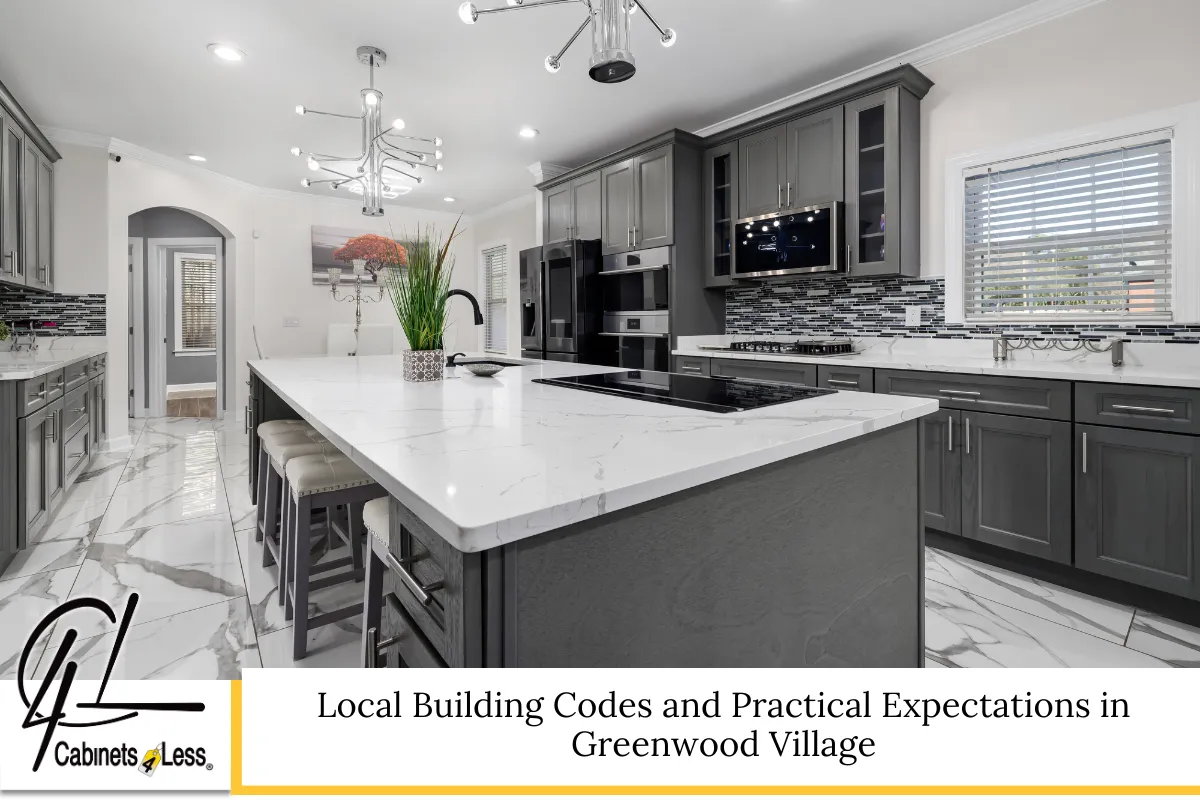
While national guidelines shape cabinet spacing, local practices and building expectations matter. Greenwood Village homes often emphasize long-term comfort, high-quality materials, and thoughtful design.
Local building standards typically align with national safety and accessibility recommendations, but spacing decisions should also reflect how the kitchen will be used daily. Kitchens designed for frequent cooking, entertaining, or multi-user households often benefit from slightly increased spacing to reduce congestion.
Planning spacing early ensures smoother coordination between cabinetry, countertops, electrical layouts, and appliance placement.
Visual Balance Between Upper and Lower Cabinetry
Correct spacing is not just about clearance—it’s also about proportion. Kitchens with poorly spaced cabinets can feel top-heavy or visually compressed.
Upper cabinets mounted too low can dominate the space, making kitchens feel smaller. When spacing is correct, the eye moves naturally across the backsplash, countertop, and cabinetry without interruption. This visual flow is especially important in open-concept kitchens where cabinetry is visible from living areas.
Modern cabinet showrooms often demonstrate how proper spacing enhances both minimalist and traditional kitchens by allowing materials, finishes, and lighting to work together.
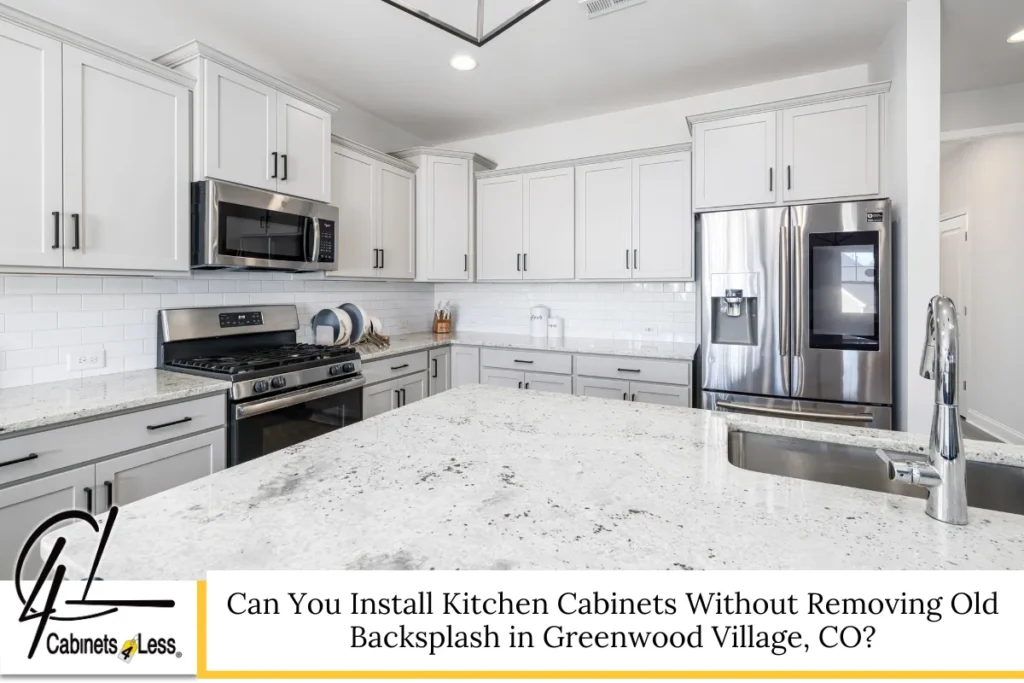
Read Can You Install Kitchen Cabinets Without Removing Old Backsplash in Greenwood Village, CO?
Backsplashes and Their Role in Cabinet Spacing
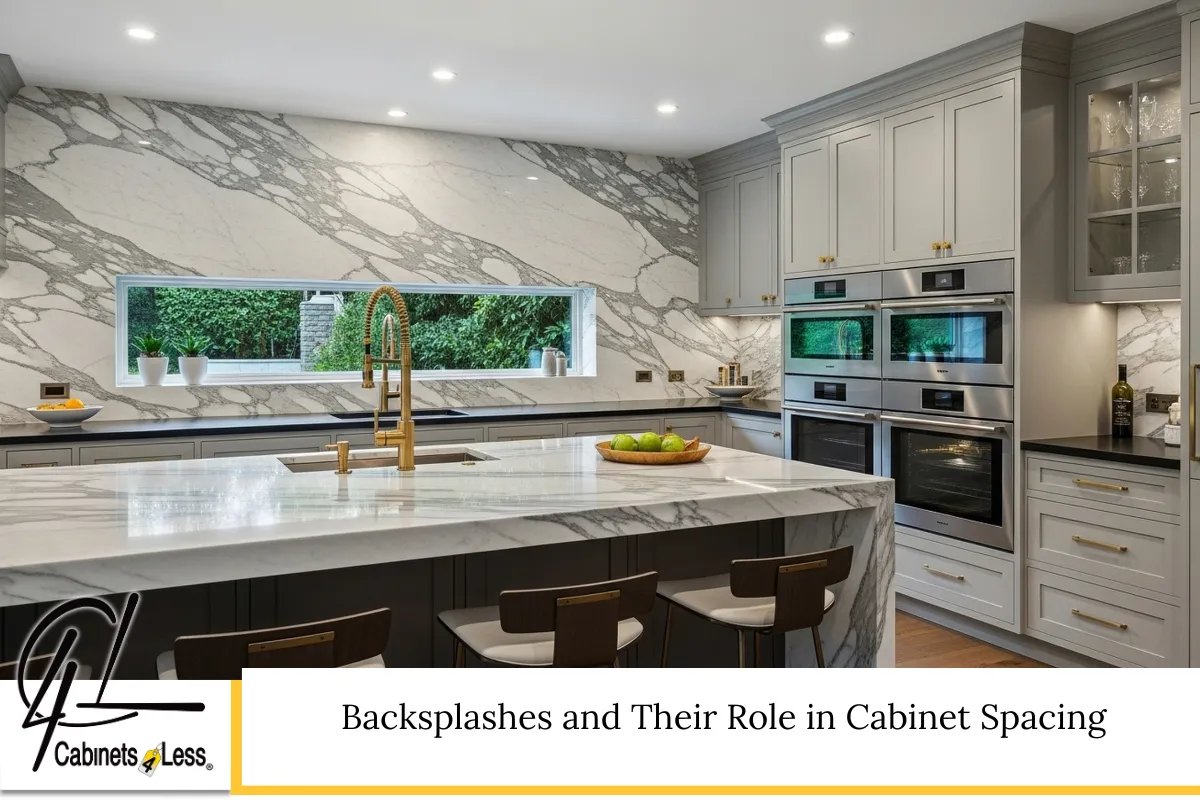
Backsplashes occupy the vertical space between countertops and upper cabinets, making spacing a critical design decision.
Standard tile backsplashes are typically 4 inches tall, but full-height or decorative backsplashes require more planning. An 18-inch clearance allows flexibility for various backsplash materials, patterns, and focal points without crowding the design.
In kitchens that feature statement backsplashes, precise spacing ensures that tile patterns align properly and remain visually centered between cabinetry and counters.
Impact of Cabinet Style on Vertical Spacing
Not all kitchen cabinets are designed the same way. Cabinet door style, depth, and trim details can influence how spacing feels.
Shaker-style cabinets often look best with clean, consistent spacing that emphasizes simplicity. More ornate cabinetry may require careful spacing adjustments to prevent decorative elements from feeling cramped.
Flat-panel kitchen cabinetry, common in modern kitchens, relies heavily on precise alignment and spacing to maintain its sleek appearance.
Storage Accessibility and Everyday Function
One of the most overlooked aspects of cabinet spacing is how it affects daily access. Cabinets mounted too high reduce usability, especially for frequently used items. Cabinets mounted too low can interfere with countertop tasks.
Correct spacing allows homeowners to reach commonly used items without strain while keeping countertops clear for prep and serving. This balance improves workflow and reduces fatigue over time.
In well-designed kitchens, spacing supports intuitive movement rather than forcing constant adjustments.
Design Trends That Influence Cabinet Placement

Current kitchen trends continue to respect standard spacing while adding subtle variations.
Open shelving often replaces some upper cabinets, increasing visual openness without sacrificing storage. Taller upper cabinets extending closer to the ceiling rely on correct lower spacing to avoid overwhelming the room.
Many kitchen cabinet stores now showcase layouts that blend standard spacing with modern design elements, proving that functionality and aesthetics don’t have to compete.
Planning Spacing Early to Avoid Costly Changes
Cabinet spacing decisions should be finalized before ordering materials. Once cabinets are manufactured, changes become expensive or impossible.
Accurate measurements ensure compatibility between cabinets, countertops, appliances, and lighting. This planning stage is where expert guidance adds the most value, preventing mistakes that only become apparent after installation.
Thoughtful spacing decisions protect both budget and timeline while delivering a kitchen that performs as well as it looks.
Kitchen Cabinets in Greenwood Village, CO – C4L Cabinetry LLC
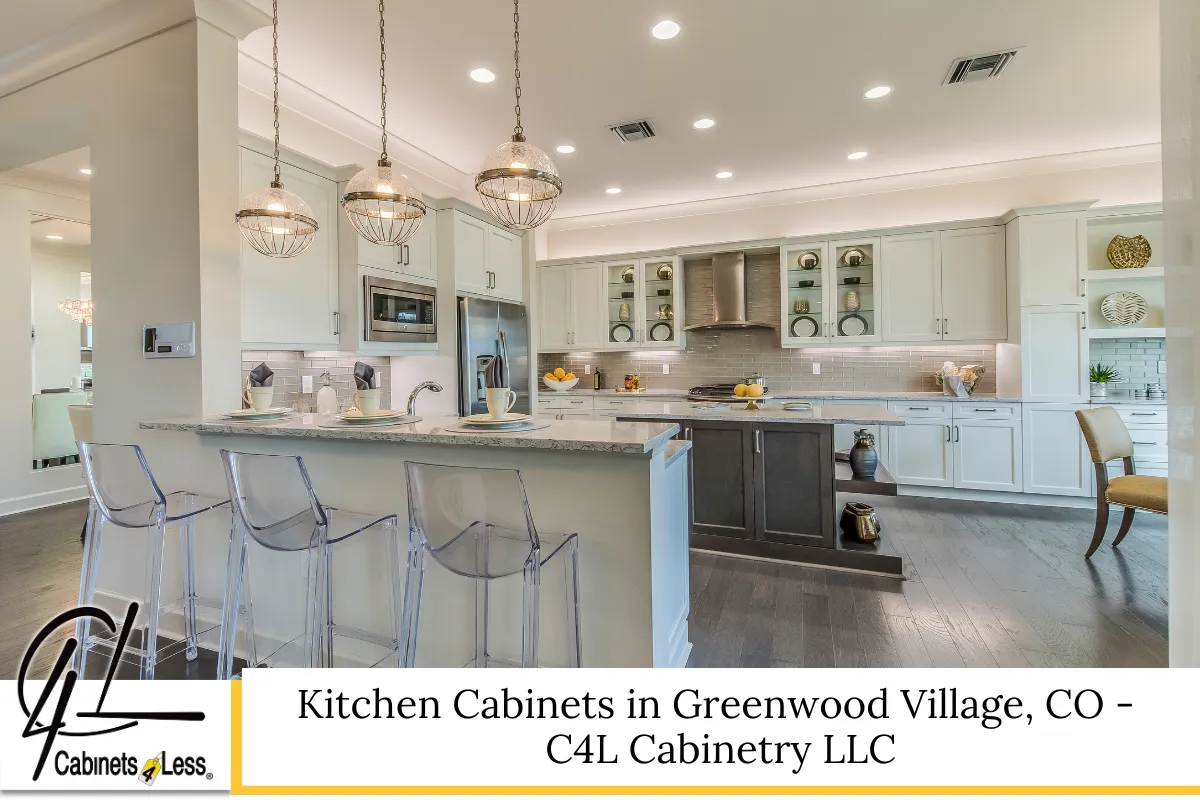
At C4L Cabinetry LLC, we help homeowners make confident decisions about kitchen cabinets by focusing on precision, design, and long-term usability. We understand that correct spacing between cabinets and countertops plays a major role in how kitchens function every day. From selecting the right cabinet dimensions to coordinating layouts that support appliances and lighting, we guide our clients through every detail. While we do not perform cabinet installation, we proudly refer customers to reputable contractors we trust. If you’re planning a kitchen update in Greenwood Village, Colorado, visit our cabinet showroom, call us at (303) 862-6470, or fill out our contact form to get expert guidance tailored to your space.
Frequently Asked Questions
How does cabinet spacing affect kitchen resale value?
Proper spacing contributes significantly to resale value because it reflects quality planning and craftsmanship. Buyers notice kitchens that feel comfortable and functional. Incorrect spacing can signal poor design decisions, even if materials are high-end. Kitchens that follow established spacing standards appeal to a wider audience and are easier for inspectors and appraisers to evaluate positively.
Can cabinet spacing improve kitchen lighting?
Yes. Correct spacing allows under-cabinet lighting to distribute evenly across countertops without glare or shadows. When cabinets are mounted too low, lighting becomes harsh and concentrated. Adequate clearance ensures task lighting enhances visibility while contributing to overall ambiance.
Is spacing different for kitchens with islands?
Island kitchens still follow standard cabinet spacing, but visual balance becomes more important. The relationship between island height, perimeter cabinets, and upper cabinetry must be coordinated to maintain symmetry and comfortable movement throughout the space.
Do custom cabinets allow more flexibility with spacing?
Custom cabinetry offers greater flexibility, but spacing should still respect ergonomic principles. While dimensions can be tailored, ignoring established guidelines can reduce comfort and usability. Custom solutions work best when they adapt standards rather than eliminate them.
Should cabinet spacing change when using open shelving?
Open shelving often replaces some upper cabinets, but remaining cabinets should maintain standard spacing. Consistency helps the kitchen feel intentional rather than fragmented. Shelving height should align visually with cabinet placement for a cohesive look.
Disclaimer: This article is for general informational purposes only and does not replace professional design, construction, or code consultation. Always verify measurements, appliance requirements, and local building standards before finalizing cabinetry plans.
Read Greenwood Village Cabinet Showroom: Are There Antique or Vintage Cabinet Styles Available?