

Kitchen cabinets are one of the hardest-working features in any house, yet most homeowners never think about what happens inside them until a shelf starts to bow. If you are tired of hearing dishes rattle on a bent surface or you are afraid that heavy cookware will crash through weakened shelving, you are not alone. Sagging kitchen cabinet shelves can be caused by excessive weight, inferior materials, and the kind of humidity shifts that are common at elevation in Greenwood Village, CO. The real fix is not just propping things up. It starts with understanding why the problem happens in the first place and then applying targeted solutions that hold up long term.
Key Takeaways
- Most standard kitchen cabinets use budget-friendly particleboard or MDF, which sag faster under weight and moisture than plywood or solid wood alternatives.
- Shelves longer than 30 inches need central support, and adding a reinforcement strip can boost shelf capacity by up to 40 percent.
- Controlling indoor humidity and redistributing heavy items are two of the simplest ways to extend shelf life in Greenwood Village homes.
- Flipping a slightly bowed shelf or installing metal stiffeners can fix minor sagging shelves without a full replacement.
Why Kitchen Cabinet Shelves Lose Their Shape
Over time, heavy items can cause shelves to bow, and the process often goes unnoticed until the sag becomes noticeable. Several factors push a shelf past its limits.
- Thin shelving material often leads to sagging shelves. Most standard kitchen cabinets use budget-friendly particleboard or MDF because they cut costs, but their low stiffness makes them vulnerable.
- Long unsupported spans contribute to shelves sagging. A shelf that stretches 36 inches between side panels with no middle support carries far more bending pressure than one spanning 28 inches.
- Weakened shelf supports may cause cabinet shelf sagging. Flimsy shelf pins can lead to uneven weight distribution and sagging, especially when the pin holes have loosened over the years.
- Overloading shelves can cause sagging beyond their weight limits. Putting heavy cast-iron pans, stacked plates, and books like thick cookbooks on the same shelf adds up fast.
The physics here is straightforward: deflection under load is proportional to the cube of span length. Double the distance between supports and the tendency to sag increases roughly eightfold.
Selecting the Right Shelving Material
Material choice is one of the most impactful decisions you can make for any cabinetry project. Here is a quick review of how common options compare under typical kitchen loads of 15 to 30 pounds per square foot.
| Material | Max Sag-Free Span (¾ in. thick) | Moisture Resistance | Relative Cost |
| Cabinet-grade plywood | ~30–32 in. | Good | Medium |
| Solid wood (oak, maple) | ~32–36 in. | Moderate (needs sealing) | Higher |
| MDF | ~24–26 in. | Poor | Lower |
| Particleboard | ~20–24 in. | Very poor | Lowest |
Cabinet-grade plywood is stiffer than particleboard and suitable for shelving in almost every scenario. Using 3/4-inch plywood increases shelf strength significantly compared to thinner panels. Choosing durable materials extends shelf life and reduces deformation, which means fewer headaches and less money spent down the road. Using high-tensile strength materials can improve shelf stiffness, and if you search for the best balance of cost and performance, plywood or hardwood should be at the top of your list. Pine works for lighter-duty shelving but lacks the density of maple or oak, so figure on shorter spans or thicker stock if you go that route. Particleboard shelves are prone to sagging in humid environments, which is worth noting for any Greenwood Village kitchen where steam from cooking raises moisture levels near the sink or stove.
Reinforcement Techniques That Deliver Results
If replacing every shelf is not in the budget, reinforcement is the next best way to explore. Several methods can turn a weak shelf into one that handles real weight.
Edge Strips and Stiffener Cleats
Installing stiffener cleats enhances shelf resistance to bending. A hardwood strip glued and attached with screws along the front edge increases the moment of inertia of the shelf. Adding a support strip can boost shelf capacity by 40 percent, extending a safe span from roughly 32 inches to about 39 inches. You can match the strip to your cabinet doors or use a contrasting wood for a bit of visual interest.
Center Supports and Vertical Dividers
A vertical center support is ideal for shelves over 30 inches. Shelves longer than 30 inches need central support to prevent sagging, and a simple piece of plywood or a decorative divider in the middle of the cabinet does the job. Center supports also create organized compartments, making it easier to keep stuff sorted by height and category.
Metal Reinforcements and Brackets
Metal shelf stiffeners provide a sleek, strong reinforcement option that tucks beneath the shelf and stays out of view. Metal supports can be used for quick shelf repairs when you do not want to pull everything apart. L-brackets can be used to add load-bearing points under shelves, and they attach directly to the cabinet box with just a few screws. For anyone thinking about a bigger remodel, a contractor can install slotted metal standards that let you continue adjusting shelf height while keeping each shelf tight against its supports.
Flipping a Bowed Shelf
Here is a suggestion many homeowners overlook: flipping shelves vertically can help correct minor bowing. If the sag is slight, turn the shelf so the concave side faces up, then place your items back on it. Gravity and the weight of the load will gradually push the curve back toward flat. This is not a permanent fix for heavily bent panels, but it buys time and costs nothing.
Reinforcing sagging kitchen cabinet shelves prevents costly structural collapses. A shelf that gives way can damage the items below it and even warp the cabinet box itself, so the end goal is always to act before the problem gets worse.
Smart Load Management and Storage Habits
Proper load management helps reduce shelf sag more than most people agree to admit. A few adjustments to how you organize your kitchen make a measurable difference.
- Place heavy dishes, cast-iron skillets, and large appliances on lower shelves or directly on the cabinet floor where the span is short and the structure is strongest.
- Redistributing weight can improve cabinet shelf stability. Spread items across multiple shelves rather than loading one shelf to the edge.
- Heavy dishes contribute to the need for shelf reinforcement, so if one shelf holds all of your stoneware, consider splitting the load.
- Avoid the habit of pushing everything to the front or back. Centering weight reduces uneven pressure on shelf pins.
These are simple suggestions, yet they are the kind of thing that gets deleted from memory once the kitchen is organized and you move on to the next project.
Controlling Moisture in Greenwood Village Kitchens
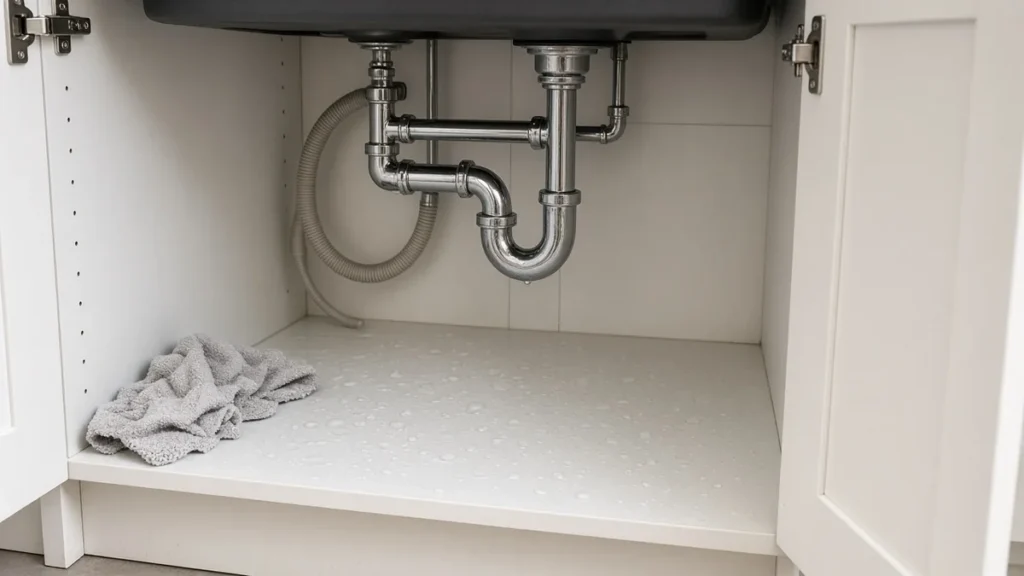
Greenwood Village sits at roughly 5,400 feet of elevation in a semi-arid climate, but do not let that fool you. Cooking, dishwashers, and occasional plumbing leaks around the sink drive indoor humidity up fast. Humidity fluctuations affect the structural integrity of wooden shelves, and seasonal humidity changes can cause wood products to weaken over time. Environmental factors can impact wood cabinetry, causing positions to shift and glue joints to loosen. Local factors such as elevated humidity affect cabinetry performance even in a dry Colorado climate.
Controlling indoor humidity is crucial to maintaining shelf integrity. Use a range hood that vents outside, run exhaust fans when boiling water, and repair any leaks around the sink area promptly. Sealing raw wood edges with polyurethane or a moisture-resistant finish adds another layer of defense.
Knowing When to Replace Instead of Reinforce
Not every shelf is worth saving. If particleboard has swollen, delaminated, or crumbled at the screw holes, no amount of reinforcement will bring back its original form. In that case, cut a new shelf from 3/4-inch plywood or hardwood, apply edge banding, and drop it in. The job is straightforward for anyone with basic tools, and the upgrade is true long-term value for your space. For larger-scale work, Greenwood Village requires building regulation compliance for residential construction under Chapter 18 of the municipal code, so if you are altering the cabinet box structure itself during a remodel, a permit review may be necessary. When in doubt, hold off and talk to a local professional who can give you an informed view of what is needed.
Kitchen Cabinets in Greenwood Village, CO – C4L Cabinetry
At C4L Cabinetry, we are a dedicated cabinet store and showroom located right here in Greenwood Village, Colorado. We help homeowners discover the right cabinetry for their kitchens, bathrooms, and beyond. Whether you are looking for plywood-construction cabinets that resist sagging or you want to explore styles that match your home perfectly, our team is ready to walk you through every option in person. We also service the prominent surrounding areas, so you do not have to travel far. If you need an installer, we are happy to refer you to trusted professionals. Visit our cabinet showroom, give us a call at (303) 862-6470, or fill out our contact form to get started. We look forward to helping you find kitchen cabinets that look great and last.
Frequently Asked Questions
Can I reinforce a sagging shelf without removing it from the cabinet?
Yes. One of the easiest methods is to attach a metal shelf stiffener or a hardwood strip along the underside of the shelf while it remains in place. Slide items off the shelf, apply construction-grade adhesive, then secure the reinforcement with short screws from below so they do not poke through the top surface. L-brackets mounted to the side panels also work without full removal. This approach keeps your cabinetry intact and avoids the hassle of dismantling adjustable shelving. It is a practical option for anyone who wants quick results before a larger renovation or for a shelf that only shows early signs of bowing.
How much weight can a standard kitchen cabinet shelf safely hold?
Industry guidelines typically rate kitchen cabinet shelves for about 15 pounds per square foot under normal use. A 30-inch-wide, 12-inch-deep shelf translates to roughly 35 to 40 pounds total capacity when built from 3/4-inch plywood. Particleboard and MDF shelves often handle less, particularly over longer spans. If you store heavy items like cast-iron cookware or large appliance accessories, that limit can be reached quickly. Upgrading to a thicker or stiffer material, or adding a center divider, raises the safe load considerably. Always check with the manufacturer or a cabinet shop for the specific rating of your shelves before loading them up.
Do adjustable shelves sag more than fixed shelves?
They can. Fixed shelves that sit inside dadoes or grooves cut into the side panels benefit from rigid end support, which can reduce deflection by up to five times compared to a shelf resting on simple pins. Adjustable shelves rely entirely on shelf pins or clips for support, which creates less structural connection to the cabinet box. That does not mean adjustable shelves are a bad choice, but they do benefit from thicker materials and proper pin quality. Upgrading from plastic pins to heavy-duty metal pins and ensuring pin holes are not worn or oversized goes a long way toward keeping adjustable shelves level.
Is it worth upgrading from particleboard shelves to plywood in older cabinets?
In most cases, yes. Swapping out particleboard for plywood is one of the most cost-effective upgrades you can make to extend the useful life of existing cabinetry. Plywood resists moisture better, holds screws more securely, and has a higher modulus of elasticity, meaning it bends less under the same load. The material cost difference is modest when you are only replacing a few shelves, and the improvement in durability is significant. If your cabinet boxes are still in solid condition, there is no reason to replace the entire unit when a shelf swap solves the core problem and keeps your kitchen functional for years.
Does altitude in Greenwood Village affect cabinet shelf performance?
Altitude itself does not directly weaken shelf materials, but the climate conditions at elevation do play a role. Greenwood Village experiences low ambient humidity for much of the year, which can cause wood and engineered panels to dry out and become brittle. Then during monsoon season or heavy cooking periods, moisture spikes and panels absorb water, expanding and contracting repeatedly. This cycle gradually weakens glue bonds and panel fibers. Maintaining a consistent indoor humidity level between 35 and 45 percent using a humidifier in winter and proper ventilation year-round helps protect your shelving from these swings and preserves the structural integrity of your cabinets.
Disclaimer: This article provides general information about preventing sagging kitchen cabinet shelves and does not constitute professional structural or building code advice. Always consult qualified professionals for your specific situation in Greenwood Village, CO.